Semaglutide weight loss in the STEP trials
A substantial change during treatment, a split after withdrawal, and a direct comparison with another molecule.
STEP 1 and STEP 5
The STEP 1 trial enrolled 1,961 adults with overweight or obesity without diabetes. At 68 weeks, mean body-weight change was -14.9% with once-weekly subcutaneous semaglutide 2.4 mg and -2.4% with placebo. The reported treatment difference was approximately 12.4 percentage points.
My first enthusiasm for those figures came before the question about tissue composition. They still do. A large change in the group's mean weight is an important finding, even though an individual result can be larger or smaller. I distrust a monthly allowance computed from the endpoint: the study followed a changing trajectory while the amount was raised and treatment continued.
STEP 5 followed adults for 104 weeks, finding sustained weight reduction significantly greater than placebo. It adds time to the observation. The body scan adds a different kind of information, separating fat and lean mass instead of extending the total's duration.
Withdrawal in STEP 4
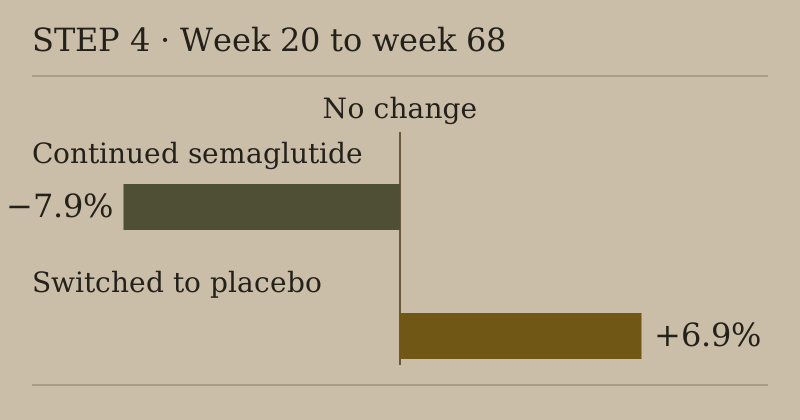
STEP 4 began with a 20-week semaglutide run-in. From week 20 to week 68, those continuing the medicine had a further -7.9% mean weight change. Those switched to placebo had +6.9% regain. The shared opening period makes the later separation unusually clear.
The figure compares those later changes only. Putting them next to STEP 1's full-treatment result without explaining the starting point would mix two different intervals. Changing that starting point changes the apparent size of the result, a small bookkeeping decision with considerable force.
This trial also makes the continuation question concrete. Remaining on treatment and withdrawing it led the groups in opposite directions. That observation has consequences for how long-term weight management is understood; it supplies no personal stop date.
The STEP 1 extension
After STEP 1 treatment and lifestyle intervention were withdrawn, participants regained a mean of roughly 11.6 percentage points of body weight within one year. Cardiometabolic improvements moved back toward baseline. The result makes a brief, self-contained course of treatment a difficult model to defend.
The tissue question continues after withdrawal. A returning total does not describe which compartments account for that return. An extension reporting weight and cardiometabolic measures gives me no reassuring answer about muscle recovery.
For the same reason, the timing of hunger changes in community stories cannot forecast a monthly weight result. Those stories are anecdotal, not clinical evidence, and the endpoint of a long trial supplies no reliable prediction for a particular person's next month.
Semaglutide vs tirzepatide
SURMOUNT-5 directly compared the medicines in 751 adults with obesity. At 72 weeks, mean weight change was -20.2% with tirzepatide and -13.7% with semaglutide; the difference was statistically significant, P<0.001. Tirzepatide activates GIP and GLP-1 receptors, while semaglutide activates GLP-1 receptors.
For this population and outcome, tirzepatide produced the larger average reduction. I see no benefit in trying to talk around that result. I also see no reason to make it answer questions about tissue preservation or every cardiovascular and kidney outcome. The direct comparison measured a particular contest.
Different populations required separate trials. STEP TEENS found a greater reduction in BMI with semaglutide than placebo in adolescents with obesity over 68 weeks. STEP 2 studied adults with overweight or obesity and type 2 diabetes. Neither is a duplicate of STEP 1's adult population without diabetes. The organ-trial account follows still other outcomes.